

Worried about visible panty lines under formal pants or leggings? Traditional cut-and-sew underwear often shows multiple seam lines. Seamless knitted underwear solves this with a smooth, second-skin finish.
This type of seamless undergarment is often referred to as ‘no show underwear’ because it is designed to be invisible under tight or revealing clothing, providing a discreet appearance. In contrast, standard underwear can be visible due to seams or bulky edges, whereas no seam underwear options use features like laser-cut edges and seamless construction to prevent visibility and panty lines.
Beyond a clean look, it offers breathability, stretch, gentle shaping, and cost efficiency. So, what exactly is seamless underwear? Let’s explore it from a manufacturer’s perspective.
Brief Introduction About Seamless Underwear Technology
The concept of seamless knitting emerged in the 1980s. In 1984, Italian manufacturer Santoni patented a circular knitting machine designed for seamless apparel. By 1988, further innovation from Santoni helped bring seamless undergarments to market at scale.
Today’s Seamless Technology and Materials
With the widespread adoption of seamless knitting equipment—especially large-diameter weft knitting circular machines—plus advances in computer automation and the use of functional fibers, seamless technology has matured rapidly. Its applications have expanded from basic underwear to a wide range of apparel categories.
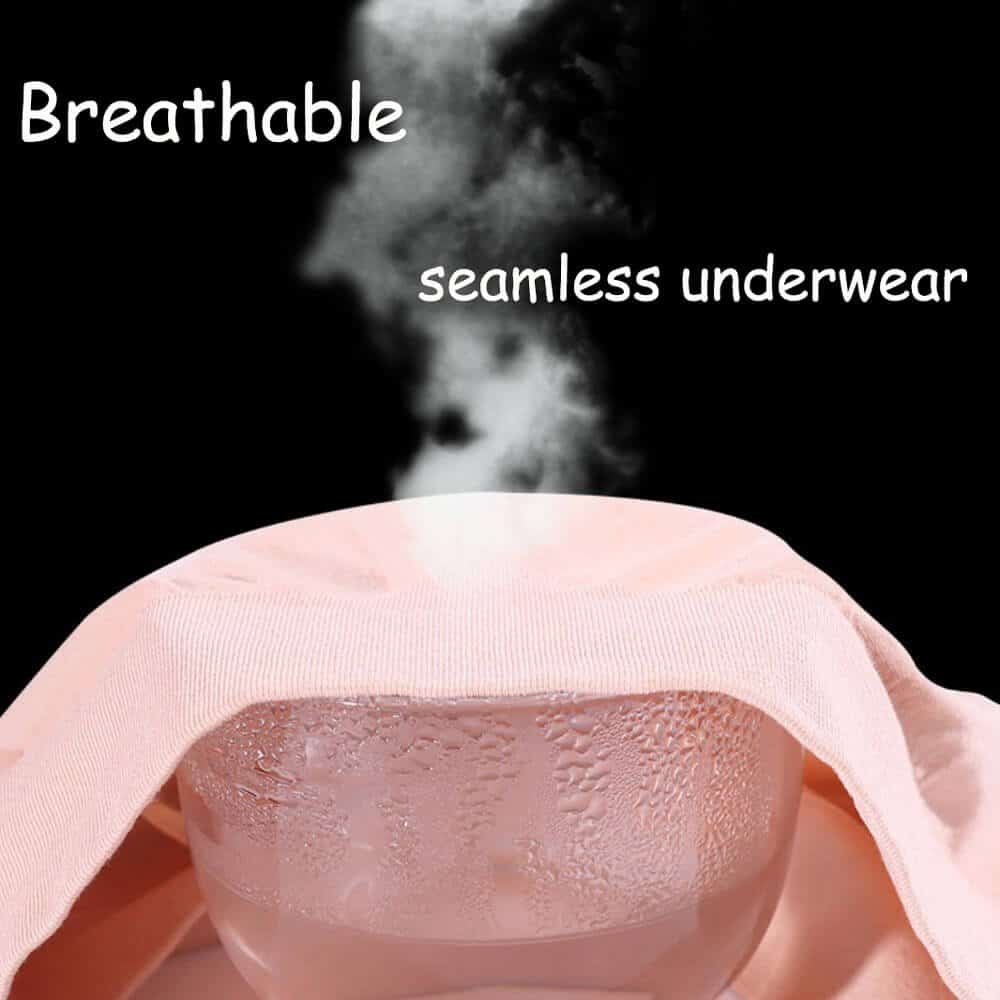
Most common textile fibers can be used, including nylon, polyester, cotton, wool, silk, and linen. Many seamless panties are made with moisture-wicking fabrics, helping to keep the wearer dry and comfortable throughout the day. Additionally, seamless underwear is known for its improved breathability compared to many cut-and-sew garments, making it a preferred choice for comfort.
How Seamless Differs from Traditional Knitting
Traditional knitting (e.g., single-jersey, double-jersey) typically produces flat fabric rolls that are later dyed, cut, and sewn into garments. Seamless knitting, by contrast, forms a tubular fabric directly on the machine, reducing or eliminating many cut-and-sew steps.
What is Seamless Underwear? (Definition)
Seamless underwear is a type of one-time shaping knitted undergarment manufactured by specialized circular knitting machines. Unlike traditional cut-and-sew lingerie, which is stitched together from pieces of flat fabric, seamless underwear is made directly from yarn fed into the machine.
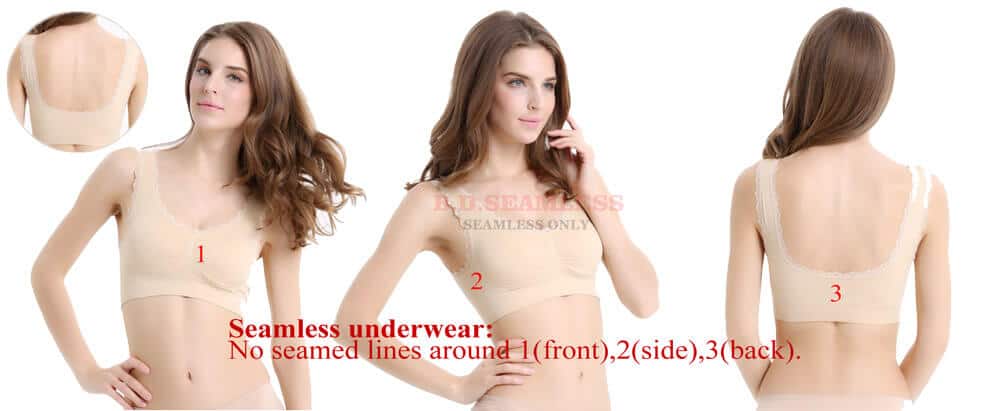
This unique process creates a continuous, tubular garment with no seamed lines around the main body (torso). The result is a “second skin” fit that eliminates bulky side seams, ensuring the underwear remains invisible under tight clothing while offering superior comfort and stretch.
How to visualize it?
Picture an oversized, cylindrical “sock” for the body. That’s the idea behind seamless undergarments: the torso is knitted in a continuous tube with no side seams at the waist or hips. Just like a sock conforms to your foot without stitching rubbing against your skin, seamless underwear adapts to your body shape with minimal joining only at necessary openings like armholes and leg openings.
Common Categories and How It’s Made
Seamless underwear typically includes bras, shapewear, and seamless panties. Unlike traditional underwear made from pre-knit fabric panels, seamless garments are knitted directly from yarn on circular machines, shaping panels and zones as they’re created. After knitting, pieces go through dyeing/finishing, minimal joining (such as gusset or strap attachment), and packaging.
Yarns and Functional Zones
Common yarns include nylon, polyester, spandex (elastane), and cotton. These yarns can be engineered into zones with different stretch, compression, or breathability directly within the knit structure. Cotton seamless undies are an excellent choice for those with sensitive skin, as the breathable and gentle fabrics help prevent irritation. After knitting, garments are dyed or finished, then inspected, trimmed, and packed.
Why Consumers Love Seamless
Wearers choose seamless underwear for its smooth look under clothing and its forgiving, non-restrictive fit. Fewer seams mean less friction, improved comfort during movement, and a “no-show” finish that works under everyday outfits and formalwear alike. Women’s seamless panties are especially popular for wearing under tight clothing, such as yoga pants and leggings, as they provide a smooth appearance without visible lines.
What does Seamless Underwear Mean?
According to Wikipedia, “underwear” is “clothes worn next to the skin, underneath outer clothing”.
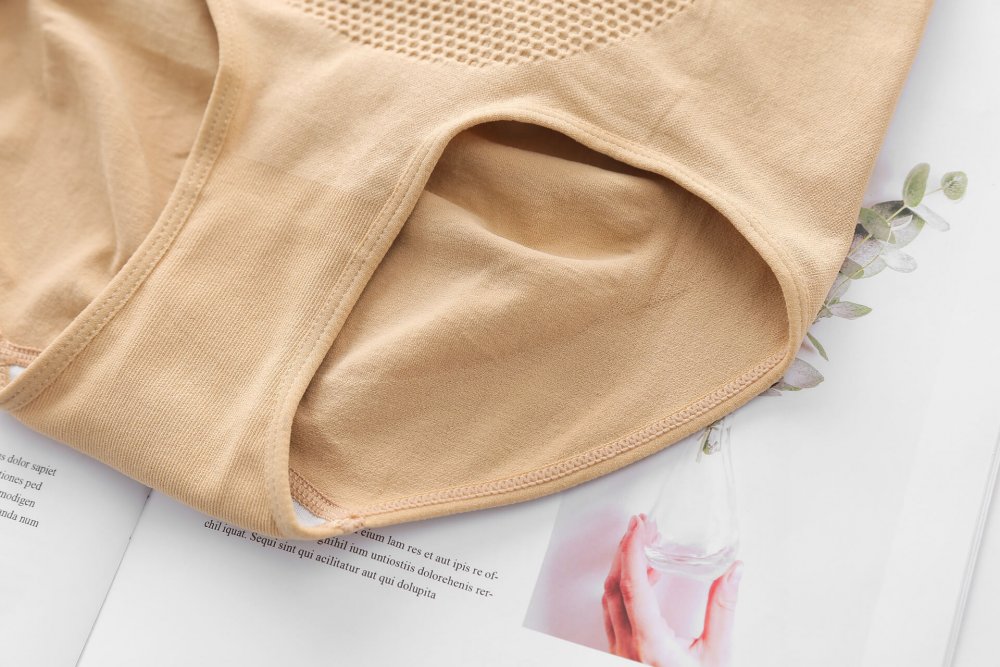
So, we can define the meaning of seamless underwear as underwear made by seamless knitting on a circular knitting machine, worn next to the skin under other clothing, with no seam lines around the main body. As shown in the picture above, there are no side seams on the torso.
Is Seamless Underwear Completely Seamless?
The answer is “NO”.
The answer is “NO”.
Basically, all clothing requires some sewing, which inevitably creates a few seam lines.
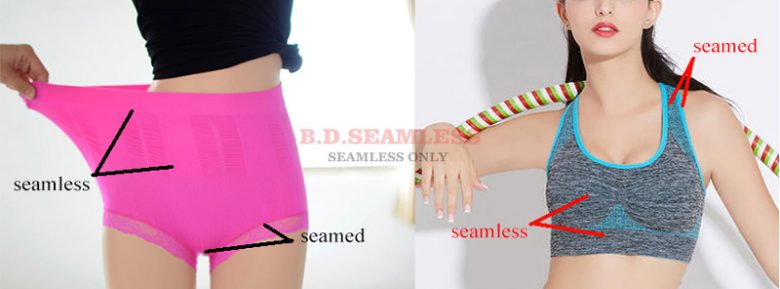
“Seamless” is relative to “seamed.” It means the main body (torso) is knitted as one piece without side seams. However, certain parts still need stitching: the crotch of panties, the openings of sleeves/legs on tops, and bra straps, for example.
So if you spot a few seam lines on the seamless undergarment you’ve purchased, it doesn’t mean the store is fraudulent. This is normal for seamless construction. They’re not trying to mislead you.
What are The Biggest Differences Between Common Undergarments and Seamless Underwear?
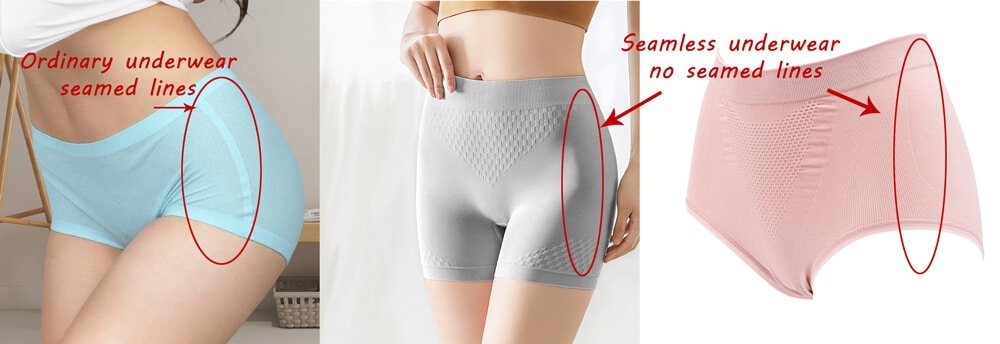
1. Facade Seamless undergarments.
have no sewing lines or loose threads on the main body and along the waistband/bottom area.
2. Custom-made jacquard pattern.
For conventional undergarments, you typically buy pre-made jacquard fabric from a material supplier—patterns are fixed. Seamless knitting solves this. Jacquard patterns can be customized directly in the knit. Simply send your preferred jacquard design to the manufacturer, and it can be woven during the knitting process.
3. Production process
- Conventional underwear: Mostly stitched from multiple cut fabric pieces, resulting in many seams across the garment.
- Seamless underwear: Knitted directly from yarns (nylon, polyester, elastane/spandex, cotton, etc.). These yarns are knitted into a tubular body; the semi-finished piece looks like a large columnar sock before minimal joining.
Seamless knitting emphasizes comfort by enabling optimal combinations of natural, man‑made, and synthetic fibers. The product fits close to the skin and offers smooth transitions around the neck, waist, and hips, making it feel more natural to wear. No seam underwear is a popular choice for wearing under yoga pants, as it remains discreet and comfortable during exercise.
Benefits of Seamless Underwear
1. Future Trends
Fewer seams mean fewer visible lines and less embarrassment under clothing. Seamless underwear also offers body‑shaping, comfort, antimicrobial options, and is suitable for fitness. These features align with consumers pursuing a healthy, comfortable lifestyle. As a result, seamless undergarments are expected to become a mainstream category in the industry with strong commercial potential.
2. Cost Saving
Labor and facility costs continue to rise globally. Because seamless underwear is primarily produced on seamless knitting machines, it can reduce production costs by up to 30% compared with cut‑and‑sew methods.
3. Consistent Quality
Seamless knitting technology has matured since the 1990s. Computer‑controlled seamless knitting machines can run continuously, producing large batches with stable accuracy and a lower defect rate.
4. Flexibility of Motion
Seamless panties offer more freedom of movement than conventional undergarments. With greater elasticity and fewer seams, the garment moves with the body.
5. Breathable Fabric
Seamless technology is known for creating garments that are more comfortable and breathable. Airflow is improved compared with many cut‑and‑sew garments.
6. All-Way Stretch
Seamless undergarments stretch in all directions and conform to the body like a second skin. This supports freedom of movement and can help athletes perform with greater agility.
7. Light-weight
Seams add weight; fewer seams reduce bulk. That’s why seamless bras or leggings feel lighter. Women’s seamless panties are an ideal light layer that provides support without feeling heavy or bulky.
8. Various customized designs
Conventional cut‑and‑sew garments have limited ways to show creativity. With seamless technology, leggings and other pieces can be knitted with integrated patterns, including perforations and mesh‑like zones.
9. Casual collocation, ever-changing shape
Seamless underwear has clean, simple design lines. It pairs easily with new fashion items, highlighting each piece without competing for attention.
Two of the Most Important Things to Choose the Right Seamless Underwear
Nobody wishes to feel their underwear pinching, drooping, or rolling throughout the day. Discovering comfy underclothing isn’t hard once you understand how to get the best fit and select a great material.
1. Selecting the Right Material
- For everyday dressing, look for seamless cotton underwear. Cotton is king when it comes to comfy underwear because it is breathable. Cotton seamless undies are an especially great alternative for females to reduce the risk of irritation. They are also less likely to cause chafing.
- Consider “No-Lines” Styles. Think about the kind of underclothing identified as “seamless” or “no-lines.” They do not have any flexibility in the hips or leg openings, making them perfect for fitted garments.
- Do not always wear silk seamless underwear. Silk has an elegant feel but does not breathe as well as cotton. Use silk only for special occasions.
- For fitness, look for nylon-spandex blends. These blended materials have stretch and moisture absorption properties, maximizing dryness while exercising.
2. Getting the Best Fit
- Determine your waist and hips. You’ll be able to find the appropriate size for your seamless undergarment if you know your measurements.
- Check your measurements. It’s an excellent concept to measure both your waist and hips twice.
- Search for flexible firmness. Select underclothing that has firm elasticity in the waistband so you know it will remain in place.
- Prevent seamless undergarment that’s too tight. Underwear that’s too tight causes unflattering bulges and skin chafing.
- Look for bunching or rolling. Ensure that your underwear is lying effectively against your body. Any set that bunches or rolls is going to be unpleasant.
Caring for Seamless Underwear
Seamless undergarments, including seamless bras and panties, are typically crafted using precision techniques. To keep your seamless pieces looking their best, a little extra care goes a long way.
Because seamless panties are made without bulky seams, it’s important to treat these garments gently.
- Washing: Hand washing in cool water with a mild detergent is the safest option. If using a machine, use a mesh laundry bag and a delicate cycle.
- Drying: Skip the high heat of the dryer—air drying is best to maintain the shape and elasticity of your seamless underwear.
The Future of Seamless Underwear
Compared with traditional underwear, seamless underwear is quite different. The pattern style of seamless underwear will be constantly changing.
Under the brand-new production technology, seamless underwear is not only comfortable and close-fitting but also has the function of beautifying and shaping the body. In addition, there are some seamless undergarment products with health care functions in the market, utilizing functional yarns for perspiration, ventilation, and antibiosis.
FAQ: Common Questions About Seamless Lingerie
Question: What is seamless underwear?
Answer: Seamless underwear is a type of lingerie knitted in a continuous, tubular piece using special circular knitting machines. Unlike traditional cut-and-sew panties, it has no bulky side seams on the torso. This creates a smooth, “second-skin” fit that offers superior comfort, stretch, and invisibility under tight clothing.
Question: What does seamless underwear mean?
Answer: It means the undergarment is knitted in a single continuous piece on a circular machine, eliminating bulky side seams for a smooth, invisible look under clothing.
Question: Is seamless underwear better?
Answer: For many people, yes. Seamless undergarments are generally more comfortable, durable, and flexible than traditional cut-and-sew panties, avoiding visible panty lines (VPL).
Question: What are the benefits of cotton seamless undies?
Answer: Cotton seamless undies combine the breathability and hygiene benefits of natural cotton with the stretch and comfort of seamless technology, making them ideal for sensitive skin.